

Experts in air filtration
Project UK5 – CleanPulse Bag Filter with Sodium Bicarbonate Sorbent Injection System for Flue Gas Treatment
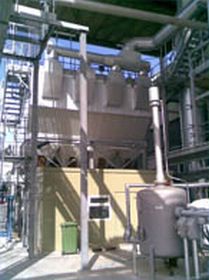
From initial enquiry to completion of installation this project extended over 24 months. The requirement was for a gas cleaning plant to remove toxic gases from a new process on a float glass line. The bag filter and sorbent injection systems are last in line after oxidiser and boiler.
Supply Highlights
- Pulse Jet Filter Design with Gas Distribution Screen
- Offline Cleaning Facility
- Independent filter compartments
- Filter installation in 4 sections plus support
- High Temperature Filter Bags and Performance Guarantee
- Special filter cages with Anti-corrosive Coating
- Dual Line Sodium Bicarbonate Injection System with 60 cubic metre silo on load cells
- Filter insulation lagging and cladding
- Trace Heating to avoid acid condensation at dew point
- High temperature equipment
- FIBC discharge with neck seal on load cells
- Consultancy to design ducting and platforms in CAD
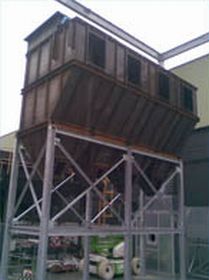
Supply Detail
The float glass process produces toxic gases as a by-product. These gases cannot be released to atmosphere and hence require a gas cleaning plant. The plant consists of thermal oxidiser, boiler, bag filter and sorbent silo as the main components with the associated control systems, electrics, supports and walkways for access and egress.
The CleanPulse bag filter deals with 12,374 actual cubic metres per hour of waste gas. It filters the gases at approximately 220 degrees centigrade after they have travelled through the thermal oxidiser and boiler. The boiler reclaims some heat for use elsewhere on site and passes the waste gas now containing fine particulate and HCl, among other constituents. The fine particulate is trapped by the 320 filter bags inside the filter which together total 350 square metres of Donaldson Tetratex filter media filtering the gas at a rate of 0.59 metres per minute.
The offline cleaning facility is achieved using dampers on the inlet and outlet of each filter section. This allows each chamber to be individually isolated from the gas flow and therefore a better level of cleaning achieved.
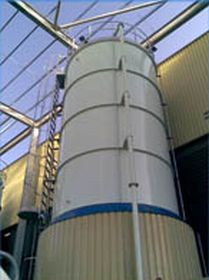
The sorbent injection system involves a large storage silo containing sodium bicarbonate. This acts as an agent to remove the HCl from the waste gas stream.
The sorbent powder is discharged from the silo via a rotary valve, surge hopper, feeder and blowing seal arrangement.
This has the capability of being controlled on the basis of HCl levels by CEMs monitoring equipment should the end user choose to upgrade the plant in the future.
The entire silo is mounted on load cells to monitor the exact sorbent level which allows the consumption to be accurately logged.
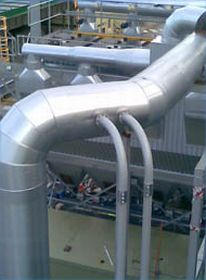
A further use of load cells was on the surge hopper arrangement.
This allows monitoring of the level of sorbent within the surge hoppers which supplemented the basic high low level control by level probes.
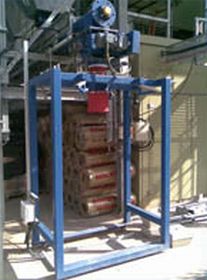
Load cells were also used on the discharge FIBC bulk bag frame to determine its need to be changed.
A smart inflatable neck seal on the FIBC bag allows clean and easy bag changeover using a simple pneumatic control local to the bag.
All of the equipment exposed to high temperature is specified to handle these extremes.
A further challenge was that Aluminium was prohibited from site so product procurement was a little more involved.
Our recent Projects
An empty warehouse is always a welcome place to start a project. This is because we have a blank canvas with which to design an ideal layout for a flue gas treatment plant. Once installed, our system cleans the gases from a waste boiler and waste infeed plant and will allow the end user to stop transporting waste around the country and manage it locally, save on transport costs and produce some electricity too.
Project VC - Turnkey Flue Gas Treatment Plant for Waste Boiler
Project JP2 - Complete Flue Gas Treatment System for Intumescent Paint Furnaces (Phase 2)
Filter Designs is a trading name of Turnkey Filtration Limited, a limited liability company registered
in England under number 16279255, whose registered office is at Filtration House, Farndon Road, Market Harborough,
LE16 9NP - Website by 1PCS

