

Experts in air filtration
Project AQF – CleanPulse Bag Filter for Tallow Engines
A farm in Northern Ireland processes animal by-products. One of the products of animal rendering is Tallow (fat). This product can now be used as a fuel in a near-to-standard diesel engine making use of some pioneering tweaks and additives under patent.
The project included 3 diesel engines, which generate power for the site. The waste gases exit through a duct system into a waste heat boiler which produces steam for the site. The gases then pass through our filter which clean the outgoing gases before the chimney. Our supply was limited to the supply of filter only.
The order was placed in the last week of April 2010. Installation was completed by 4th week in June 2010, a total turnaround time of 8 weeks. This period includes complete design in 3D Solidworks.
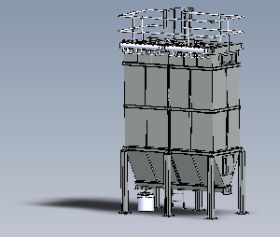
Filter system in Solidworks 3D
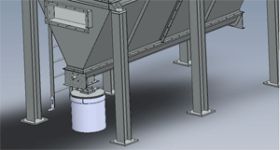
Filter hopper and discharge bin
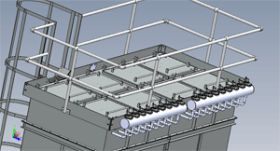
Filter access via CAT ladder to top access doors. Also shows pulse control compressed air tanks, modified for easy access to valves.
Supply Highlights
- High temperature filter system
- CAT ladder access
- Pre-assembly at fabricators
- Pre-installation of bags and cages
- Installed in 15 hours
- Discharge via screw conveyor to bin
- Fully insulated and clad
Supply Detail
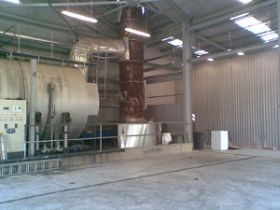
This image shows the site before our filter system arrived.
Fortunately the timing of our installation was before the diesel engines and boiler arrived, so we had plenty of space with which to work.
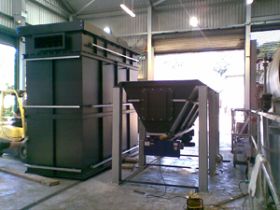
The filter hopper is bolted to the floor before...
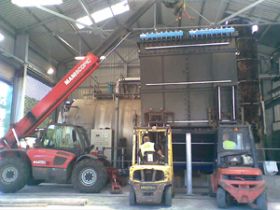
...lifting the main case section and top section (pre-assembled) into position. Here, the benefit of work done at the fabrication shop yields rewards in time saved on site.
Note that the rails required for cladding attachment are pre-installed.
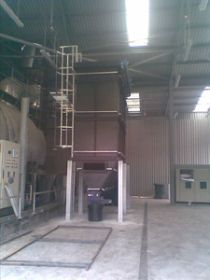
Scaffolding erected to allow insulation and cladding
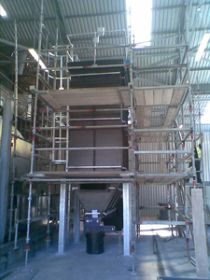
Main filter installation is complete.
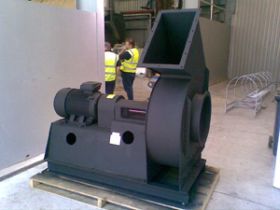
The induced draught fan before installation.
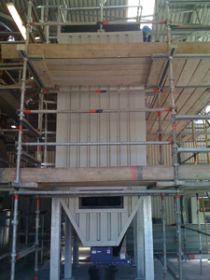
Filter after insulation and cladding.
The filter operating temperature will be around 240 degrees centigrade.
High temperature heat isolation pads separate the filter from its support legs to prevent the legs getting hot but primarily to avoid cold spots in the filter where acid gas condensation could potentially form.
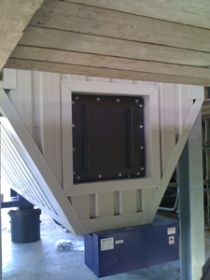
The filter hopper access door for maintenance and inspection of filter bags.
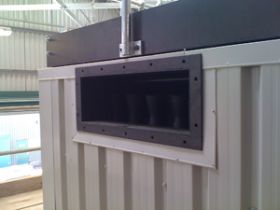
Clean air outlet flange, neatly insulated and clad.
Thoughtfully, the insulators attached the cladding with self tapping screws to allow temporary removal of the cladding when the ducting installers are on site.
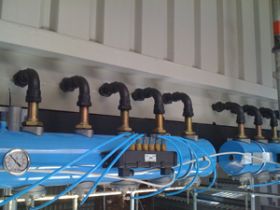
At the top of the filter is the pulse system. Out of sight, the control unit instigates the valves which send a blast of compressed air down into the bags to clean them.
Glycerine filled compressed air dials mean that they stay clear for many years to come.
Our recent Projects
An empty warehouse is always a welcome place to start a project. This is because we have a blank canvas with which to design an ideal layout for a flue gas treatment plant. Once installed, our system cleans the gases from a waste boiler and waste infeed plant and will allow the end user to stop transporting waste around the country and manage it locally, save on transport costs and produce some electricity too.
Project VC - Turnkey Flue Gas Treatment Plant for Waste Boiler
Project JP2 - Complete Flue Gas Treatment System for Intumescent Paint Furnaces (Phase 2)
Filter Designs is a trading name of Turnkey Filtration Limited, a limited liability company registered
in England under number 16279255, whose registered office is at Filtration House, Farndon Road, Market Harborough,
LE16 9NP - Website by 1PCS

