

Experts in air filtration
Project IB USA – CleanPulse Bag Filter under Positive Pressure with Acid Gas Neutralisation
Problem
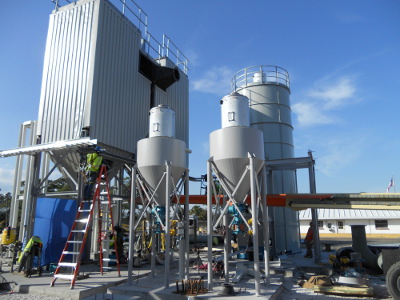
An international client required assistance in building two flue gas treatment plants for a cellulosic ethanol production plant.
This was a pioneering exercise to turn a new technology into a commercial production plant.
Filter Designs are signed up to a non-disclosure agreement so in this case study we focus on our plant supply in brief.
The challenge was to develop a plant which would operate with Syngas which brought several technical challenges.
Filter designs rose to these challenges to create a system which has now been in operation for several years.
Solution
Essentially several standard filter components were extensively modified to suit the process gases and client requirements. This was technically challenging as above, but to add to this were voltage differences, pressure testing standards (ASME) to comply with and UL certifications to obtain for UK sourced equipment.
We supplied the equipment which was fabricated in the UK, packaged by FDL and shipped to site. Following erection by the US client, we visited to commission and train US operatives.
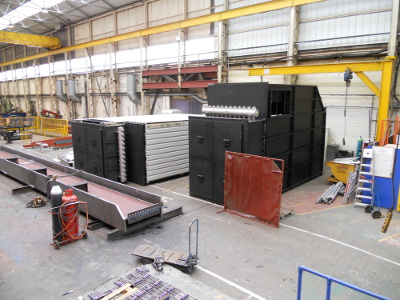
The filters were extensively pressure tested in the fabrication shop before final fitting and shipping.
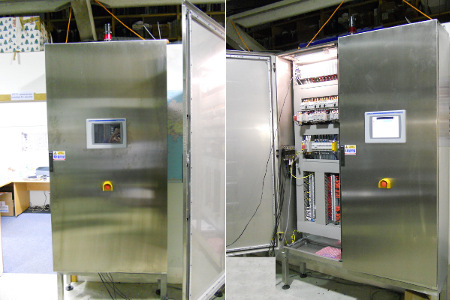
The control panels were to a specification to allow seamless integration into the clients main DCS.
Both panels with touchscreen HMI and full programming.
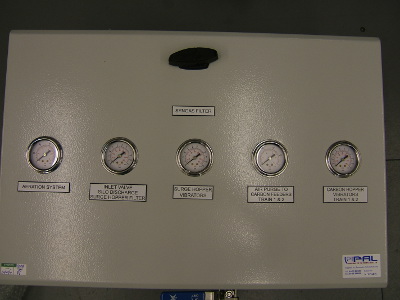
A pneumatics control panel keeps everything neat and tidy without the need for solenoids or regulators in the field.
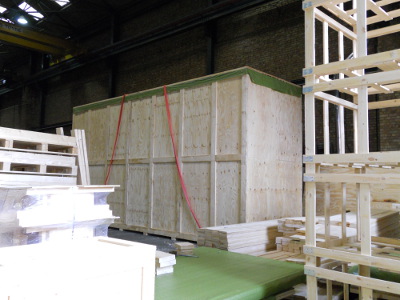
Packaging was at significant cost since shipping to the states could induce corrosion.
Most items were crated and transported to port out of Leicester.

The commissioning trip to Miami was not all work and the Mustang offered suitable transport to the golf course.
55mph limits do not really give much scope to enjoy the potential.
Our recent Projects
An empty warehouse is always a welcome place to start a project. This is because we have a blank canvas with which to design an ideal layout for a flue gas treatment plant. Once installed, our system cleans the gases from a waste boiler and waste infeed plant and will allow the end user to stop transporting waste around the country and manage it locally, save on transport costs and produce some electricity too.
Project VC - Turnkey Flue Gas Treatment Plant for Waste Boiler
Project JP2 - Complete Flue Gas Treatment System for Intumescent Paint Furnaces (Phase 2)
Filter Designs is a trading name of Turnkey Filtration Limited, a limited liability company registered
in England under number 16279255, whose registered office is at Filtration House, Farndon Road, Market Harborough,
LE16 9NP - Website by 1PCS

